COMPASSION IN OUR COMMUNITY
Fighting stigma
Support, not stigma. Love, not shame.
Care for the whole person
Behind every story is a person, a family, and a community. We honor that humanity by listening without judgment and offering practical support.
- Use language that puts the person first.
- Listen with compassion.
- Share information and resources without blame.
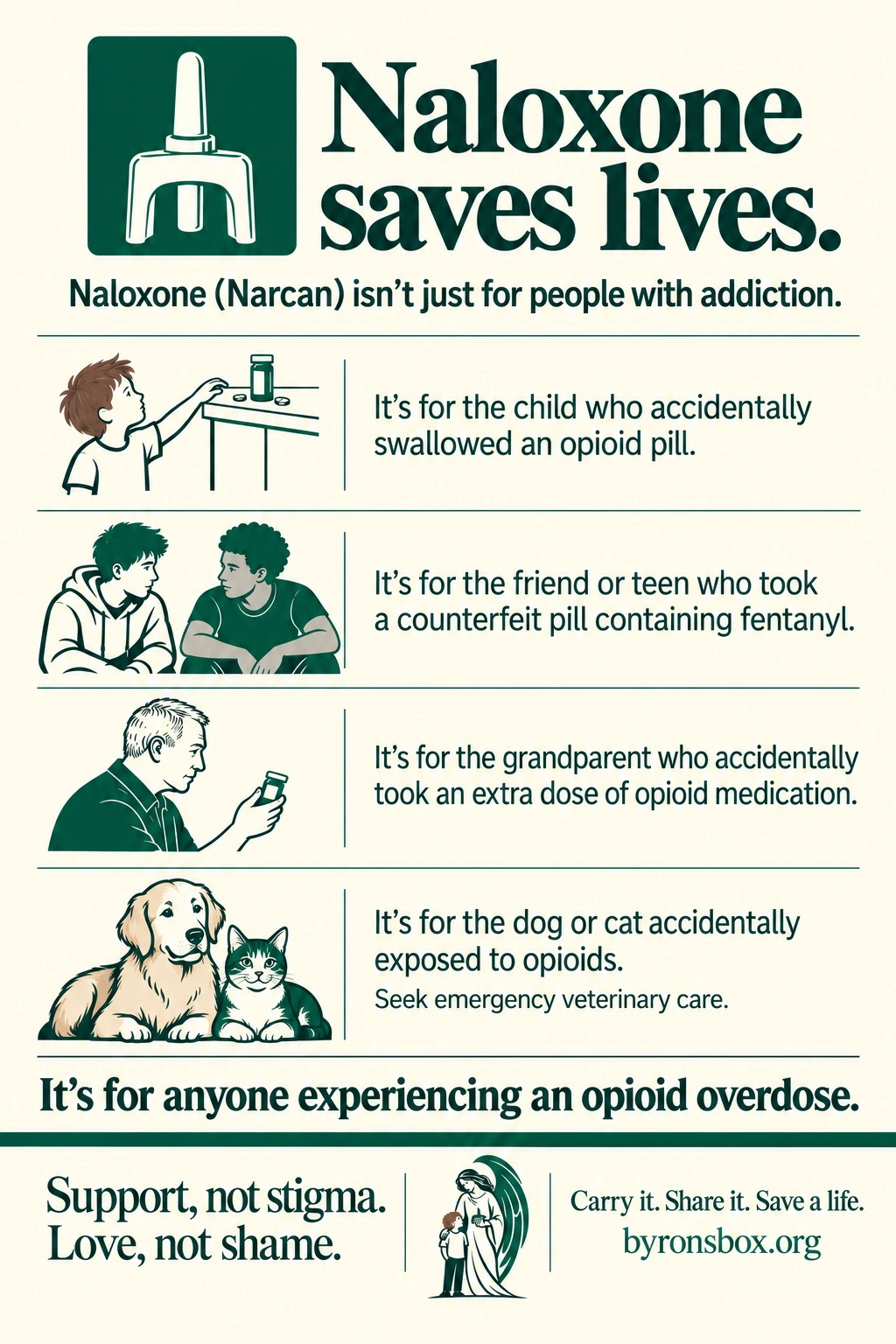
Read the graphic as text
TEXT FROM THE GRAPHIC
Naloxone saves lives
Naloxone (Narcan) isn’t just for people with addiction.
- It’s for the child who accidentally swallowed an opioid pill.
- It’s for the friend or teen who took a counterfeit pill containing fentanyl.
- It’s for the grandparent who accidentally took an extra dose of opioid medication.
- It’s for the dog or cat accidentally exposed to opioids. Seek emergency veterinary care.
It’s for anyone experiencing an opioid overdose.
Support, not stigma. Love, not shame.
Carry it. Share it. Save a life.
CHALLENGE THE MYTHS
Narcan: true or false?
Fear and misinformation cost lives. Test what you know, challenge the myths, and arm yourself with the truth.
Read each statement, decide if it’s true or false, then check the answer below it.
0 of 12 answered · 0 correct
Question 1 of 12
Now you know the truth. Share it, carry Narcan, and be ready.
Review how to use naloxoneBe someone’s angel. Carry Narcan. Save a life.
Suspect an overdose? Give naloxone (Narcan), then immediately call 911. Stay until emergency help arrives.
REFRAME THE MINDSET
Every person is someone’s loved one
The words we use shape how people are treated, and whether they feel safe asking for help. Shame keeps people hiding. Compassion keeps them alive.
| Instead of | Try |
|---|---|
| Person with a substance use disorder | |
| Person who uses drugs | |
| In recovery, not using | |
| Currently using |
- Substance use disorder is a health condition, not a moral failing or a lack of willpower.
- Recovery isn’t a straight line. Setbacks are part of many people’s journey, not the end of it.
- Staying alive comes first. Every life saved is another chance at healing.
- Lead with kindness. A calm voice and a little respect can be the reason someone reaches out for help.
FOR FAMILIES
Love someone who uses? You matter too
Loving someone through substance use can feel lonely, frightening, and exhausting. You are not alone, and it is not your fault. You didn’t cause it, and you can’t control it, but you can stay connected and help keep them safe.
Ways to help your loved one
- Keep Narcan at home and with you. Show everyone in the house where it is.
- Stay connected. Keep the door open, even when it’s hard. Connection gives people a reason to keep going.
- Speak without shame. Calm, honest words help more than anger or blame.
- Learn about treatment options so you’re ready when they are.
Take care of yourself
- Rest, eat, and let other people help you.
- Find people who understand. Support groups for families can be a lifeline.
- Set boundaries when you need to. Protecting your own peace is not giving up on them.
SPACE TO REMEMBER
If you’ve lost someone
Your grief is real, and your person’s life mattered. Losing someone to overdose can bring shame and silence that other losses don’t. You deserve support and space to remember them with love.
If general grief groups haven’t felt like the right fit, you’re not alone. Groups made for families who’ve lost someone to substance use, like GRASP, understand this kind of loss.
GRASP — Grief Recovery After a Substance Passing offers support for families who have lost someone.
New attendees need to register with the meeting facilitator. Details are on GRASP’s meeting page.
Where to find support
SAMHSA National Helpline
Free, confidential, 24/7 treatment and support referrals.
Call 1-800-662-4357About the helpline988 Lifeline
Call or text anytime for emotional support or crisis help.
Call 988Text 988About the LifelineBREAK THE SILENCE
Our stories have power
Stigma grows in silence. Every time we hide what we’ve lived through, shame wins a little more. When we speak openly about substance use, recovery, and loss, we take that power back.
Your voice could be the reason someone else stays alive.
- Refuse to carry shame that isn’t yours. Substance use disorder is a medical condition. Living through it, or loving someone through it, is nothing to hide.
- Share your lived experience. Hearing “me too” can help someone feel less alone and more ready to ask for help.
- Talk openly with family, friends, and your community. Honest, caring conversations make it easier for people to seek treatment instead of suffering in secret.
- Start the conversation with love. When you talk with someone who’s struggling, lead with care, not judgment, and let them know you’re on their side.
- Say their names. Speaking about the people we’ve lost keeps their memory alive and reminds the world that every overdose took someone loved.
Be someone’s angel. Carry Narcan. Save a life.
In an overdose emergency, always call 911.